Technical Records Intelligence
for Aircraft Transitions
Aviint is building a connected platform for aircraft transition records — bringing specialist review modules, records intelligence, and transition management into one aircraft workspace.
Starting with practical workflows already in use today, Aviint is being developed to support the full technical records review process from initial records and status review through findings, resolution, and final delivery.
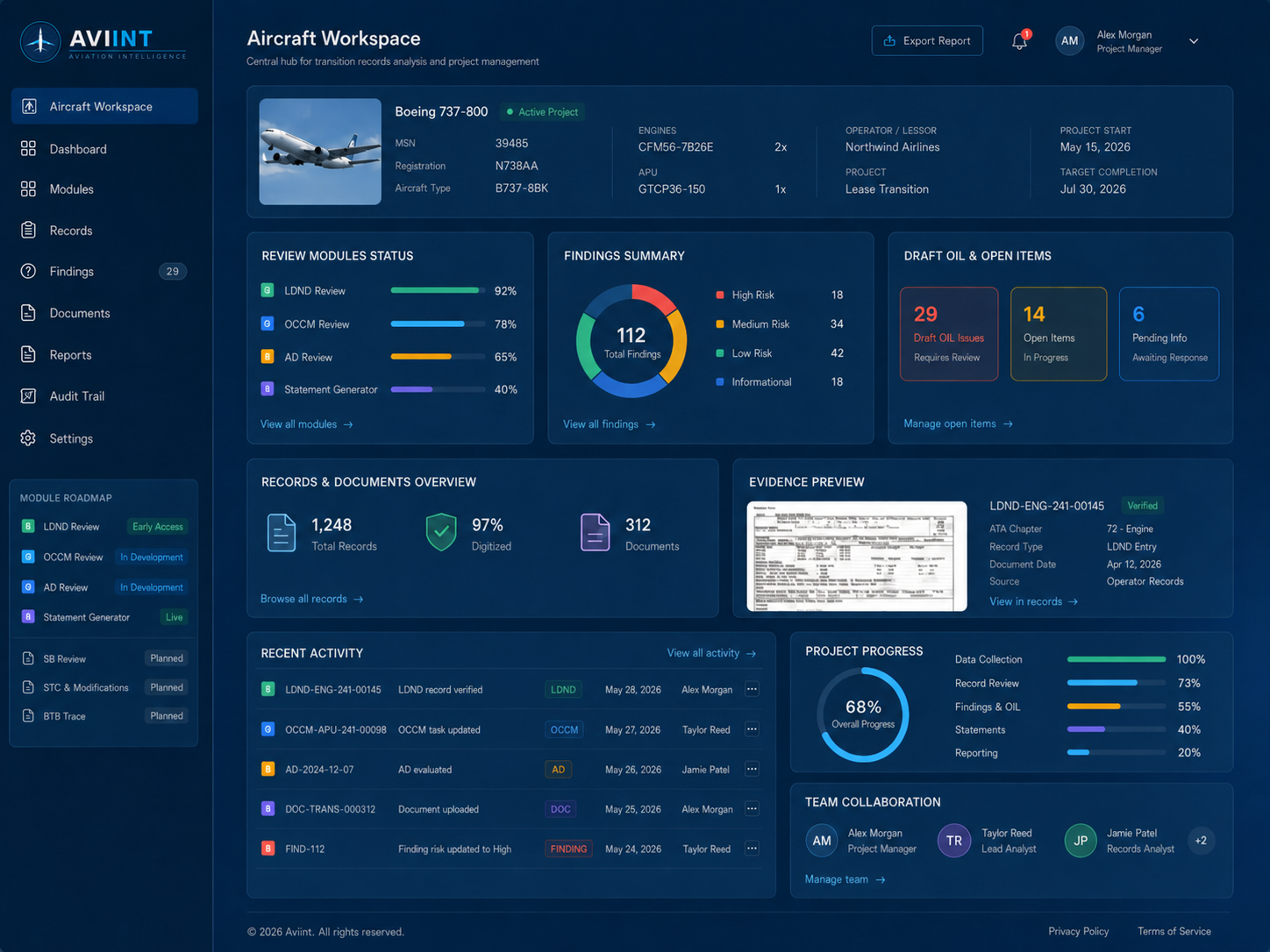
One Connected System for Aircraft Transition Records
Aircraft transitions involve multiple technical reviews, thousands of supporting records, and findings that need to be tracked through to resolution. Aviint is built around a shared Aircraft Workspace, connecting all of this in one system.
Technical Review Modules
Purpose-built workflows for each of the specialist reviews required during an aircraft transition. Each module is designed around the actual requirements and review process for its technical area.
- LDND & OCCM
- Airworthiness Directives
- Hard-Time & LLP
- SB, STC & Modifications
- Repairs & Structures
- BTB Trace & Maintenance Status
Records Intelligence
A shared records layer that structures and connects the underlying technical records, so information identified in one part of Aviint can be reused across other workflows.
- Record ingestion & classification
- Status extraction
- Document naming & organization
- Evidence linking
- Cross-document consistency checks
- Missing-record & issue detection
Transition Management
Connecting technical findings to the wider transition process, from initial review through operator responses, revised-record review, and final delivery.
- Draft OIL preparation
- Findings management
- Response & revised-record review
- Finding re-evaluation
- Closure tracking
- Delivery Bible preparation
One aircraft. One workspace. Connected technical records intelligence.
What's Available Now
Statement Generator
Generates aircraft transition statements from aircraft and project information entered once into the workspace.
LDND Review Module
Reviews operator LDNDs against the applicable OEM MPD, cross-checks tally lists against latest accomplishments, and generates workscope against contractual clearance requirements.
OCCM Review Module
Automates on-condition component status extraction, cross-checks against operator records, and flags items for technical review.
AD Review Module
Reviews airworthiness directive compliance status against aircraft records, identifies applicable ADs, and checks for documentation gaps.
One Aircraft. Connected Workflows.
Aviint is built around the aircraft — not around isolated tasks or individual documents. Aircraft information, technical records, review results, supporting evidence, and findings are brought together in a shared workspace and used across the transition.
Build the Aircraft Workspace
Create the aircraft project and bring together the data and records needed for the transition. Aircraft, engine, APU, landing gear, and component information is entered once and reused across all workflows.
Perform Specialist Technical Reviews
Use dedicated modules for each technical area of the transition. Each module applies the appropriate workflow, requirements, and validation logic for areas such as LDND, OCCM, AD, LLP, SB, Modifications, Repairs, and BTB Trace.
Connect Findings to the Evidence
Review results are structured into clear findings and linked to the supporting records behind them. Information identified in one workflow can support other reviews, reducing duplicate work.
Manage the Transition Through Closure
Findings flow into the wider transition process — from draft OIL preparation and operator responses through revised-record review, re-evaluation, closure, and final records preparation.
Built From the Technical Review Outwards
Aviint is not a generic document platform adapted for aviation. It is built around the actual workflows, decisions, records, and evidence involved in aircraft transitions.
Domain Logic First
Technical records review requires more than extracting text from documents. Applicability, compliance, configuration, component history, maintenance requirements, and document relationships all need to be understood in context. Aviint combines structured review logic with AI where it adds value — rather than relying on AI alone to make technical decisions.
Purpose-Built Review Modules
Each technical area has its own requirements and review methodology. Aviint's specialist modules are designed individually around those workflows, while sharing aircraft data, records, evidence, and findings through the wider platform.
Human Review Stays in the Workflow
Aviint is designed to support technical professionals, not remove them from the process. The system helps perform repetitive checks, organize evidence, identify discrepancies, and structure findings — while keeping technical review and final decisions with the user.
Traceable by Design
Technical findings need to be defensible. Aviint is designed so that conclusions remain linked to the source information, supporting records, and review logic behind them — so findings can be verified, challenged, or escalated with confidence.
Built From Hands-On Transition Experience
The workflows behind Aviint come directly from practical experience with aircraft deliveries, redeliveries, records audits, technical reviews, and lessor-side transition support. That experience shapes what Aviint checks, how findings are presented, and where automation can genuinely reduce workload.
Technology built around the review — not the review forced around the technology.
Help Shape Aviint
We are working with aircraft lessors, technical representatives, and airlines to develop the platform. If your team works with aircraft transition records, we would be glad to connect.